 Anheften
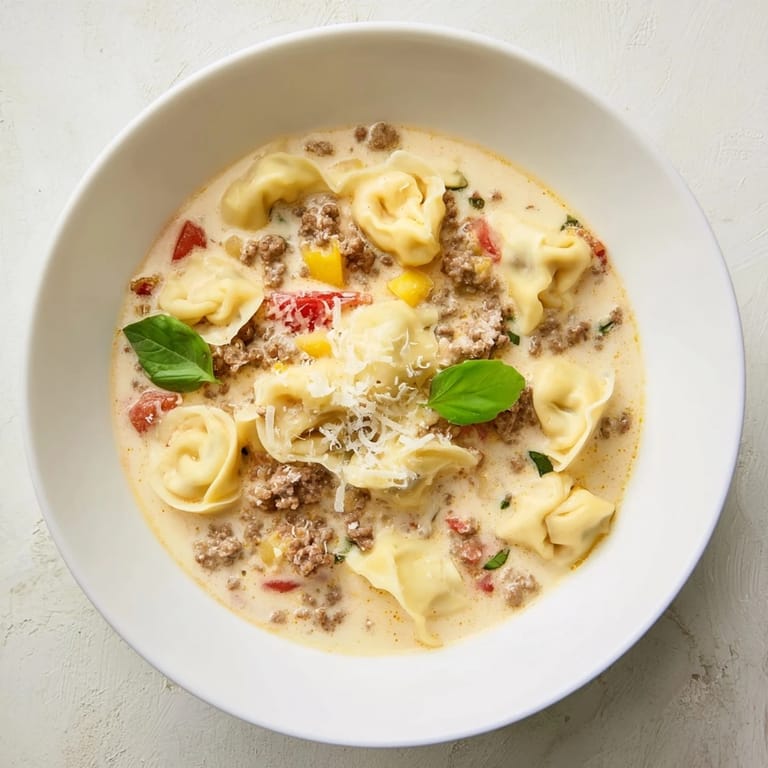
 There's something almost magical about the first spoonful of a soup that tastes like someone's been tending to it all afternoon, even though you've only spent forty-five minutes in the kitchen. I discovered this Tortellini Beef Soup entirely by accident one Tuesday when I was supposed to be making something fancier, but the weather turned cold and I lost my nerve. The beef browned beautifully, the cream swirled into the tomato-basil broth like a watercolor painting, and by the time those pillows of cheese tortellini bobbed up to the surface, I knew I'd found something worth repeating again and again.
I made this for my neighbor one winter evening when she was going through a rough patch, and I watched her face soften with each spoonful, the way people do when food reminds them that someone cares. She asked for the recipe before she'd even finished the bowl, which told me everything I needed to know about whether this soup was a keeper.
Ingredients
- Lean ground beef (1 lb): Use the leanest you can find without going too far—you want enough fat to brown beautifully, but not so much that you're skimming grease off the surface later.
- Yellow onion (1 medium, diced): Yellow onions are sweeter than white ones and mellow as they cook, becoming almost caramel-like in the broth.
- Garlic (2 cloves, minced): Fresh garlic makes all the difference; jarred just doesn't have the same punch in a delicate broth like this.
- Diced tomatoes (1 can, 14.5 oz, undrained): Keep the juice—it's liquid gold for building the flavor base of the soup.
- Baby spinach (2 cups, optional): I skip it sometimes and the soup is perfect, but when I add it, something about the earthiness makes the whole bowl feel more nourishing.
- Low-sodium beef broth (4 cups): Low-sodium is essential because you're seasoning as you go and can always add salt, but you can't take it back.
- Heavy cream (1 cup): This transforms the soup from good to luxurious; the fat carries all those herb flavors straight to your taste buds.
- Tomato paste (2 tbsp): A small amount of tomato paste concentrates the tomato flavor without making the soup taste canned or heavy.
- Fresh or refrigerated cheese tortellini (10 oz): Refrigerated tortellini cook faster and have a more delicate texture than frozen varieties.
- Dried basil (1 tsp): Basil and tomato are partners in crime; together they create that distinctive Italian-American warmth.
- Dried oregano (1/2 tsp): Just enough to add depth without letting oregano dominate the show.
- Salt and black pepper: Season to taste—every broth is different and needs its own balance.
- Crushed red pepper flakes (1/4 tsp, optional): A whisper of heat that doesn't announce itself loudly.
- Grated Parmesan (1/4 cup) and fresh basil: Finish each bowl with these, and suddenly it's a dish worthy of lingering over.
Tired of Takeout? 🥡
Get 10 meals you can make faster than delivery arrives. Seriously.
One email. No spam. Unsubscribe anytime.
Instructions
- Brown the beef:
- Set a large pot over medium heat and let the ground beef break apart as it cooks, listening for the sizzle and watching for the color change from pink to deep brown. You'll know it's ready when there are no more pink bits hiding in the pan and the kitchen smells like something savory is about to happen.
- Build the flavor base:
- Add the diced onion and let it soften for a few minutes until it turns translucent and smells sweet, then add the garlic for just long enough that the raw edge mellows out. This is where your soup starts developing personality.
- Deepen with tomato paste:
- Stir in the tomato paste and let it cook for a minute or two—this little step unlocks a richness that tastes like you've been cooking all day. Add the canned tomatoes with all their juice, along with the basil, oregano, salt, pepper, and red pepper flakes if you're using them.
- Simmer and marry the flavors:
- Pour in the beef broth and bring everything to a gentle boil, then lower the heat and let it bubble softly for about ten minutes. This quiet simmering time is when all the herbs and spices get acquainted with each other.
- Add the cream:
- Stir in the heavy cream and bring the soup back to a gentle simmer—never a rolling boil from here on, or the cream can separate and turn grainy. The broth will shift from rusty red to a beautiful coral pink.
- Cook the tortellini:
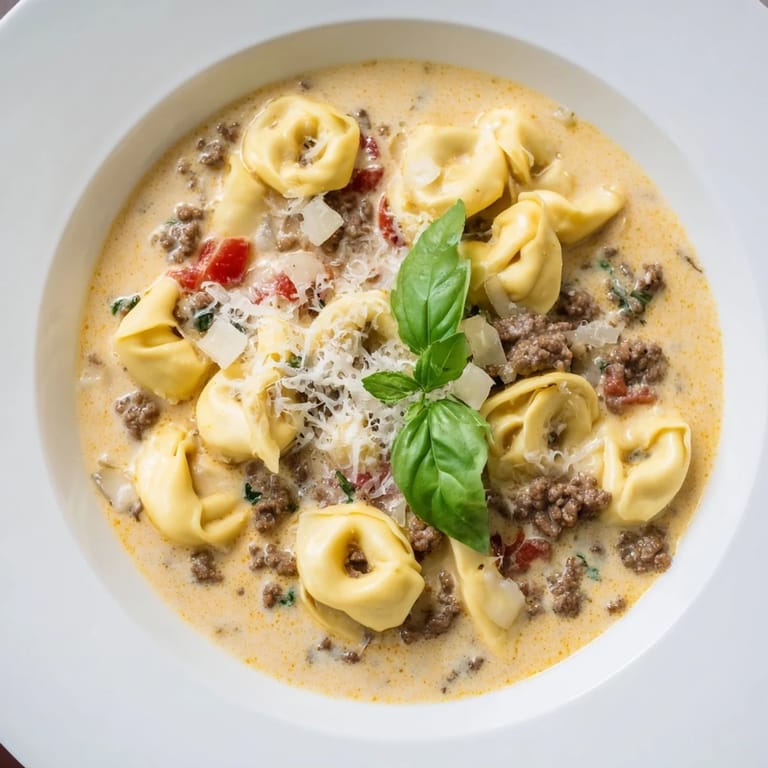
- Add the cheese tortellini and let them cook until they float and are tender, usually about four to six minutes, depending on whether they're fresh or frozen. You'll notice the moment they're done because they bob up to the surface like little boats.
- Finish with spinach (optional):
- If you're using baby spinach, stir it in now and let it wilt into the warm broth in just about a minute. It adds a subtle earthiness without changing the character of the soup.
- Taste and adjust:
- Ladle up a spoonful, blow on it to cool it down, and taste honestly—you might need more salt, a crack more pepper, or even another pinch of basil to get it to sing.
- Serve:
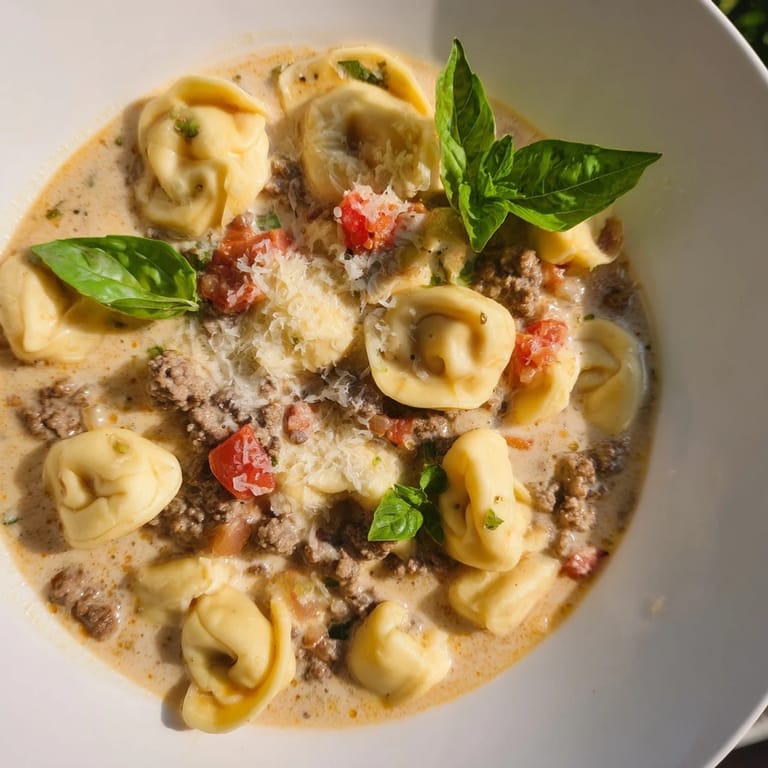
- Ladle the soup into bowls and finish each one with a small handful of grated Parmesan and a few fresh basil leaves torn right over the top.
 Anheften
 There was an afternoon when my daughter came home from school exhausted and asked what was for dinner, and when I told her she'd have soup ready in less than an hour, I saw her whole face change. By the time she was halfway through the bowl, she was telling me stories about her day that she'd been keeping to herself all week, the kind of confidences that seem to flow more easily when you're sharing something warm and comforting.
Why This Soup Works
The secret to this soup is that it balances richness with brightness—the heavy cream makes it feel indulgent, but the tomatoes and fresh basil keep it from being heavy or one-note. It's Italian comfort food filtered through an American kitchen, which means it doesn't pretend to be something fancy, but it doesn't need to be.
Making It Your Own
This soup is endlessly forgiving of substitutions and experiments. I've made it with half-and-half when I'm feeling lighter, added handfuls of other vegetables like zucchini or carrots when I've had them on hand, and once I even stirred in a few white beans and it was perfect. The framework is strong enough to hold whatever you want to add.
Serving and Storage
This soup is best served hot, in bowls big enough that you don't feel rushed, ideally with a slice of crusty Italian bread and a glass of wine if that's your style. The beauty of making it ahead is real—you can prepare everything up to the tortellini, refrigerate it, and then finish cooking the pasta right before serving so it stays tender and doesn't absorb too much broth.
- Pair it with a full-bodied red wine like Chianti for a combination that feels almost elegant.
- Leftovers keep well in the refrigerator for about three days, and the flavors actually deepen overnight.
- If reheating, warm it gently over low heat and add a splash of broth if it's thickened up too much.
 Anheften
 This is the kind of soup that reminds you why people gather in kitchens on cold evenings, why a simple bowl of something warm and well-made can be the answer to a question nobody asked. Make it once and you'll find yourself making it again.
Rezept Fragen & Antworten
- → Wie lange dauert die Zubereitung?
Die Vorbereitung benötigt etwa 15 Minuten, die Kochzeit rund 30 Minuten, insgesamt ca. 45 Minuten.
- → Kann ich frische Tortellini ersetzen?
Gefrorene oder gekühlte Käsetortellini funktionieren ebenfalls gut, beachten Sie die Kochzeit auf der Verpackung.
- → Wie lässt sich die Suppe cremiger machen?
Die Zugabe von Sahne verleiht der Suppe eine cremige Konsistenz und einen milden Geschmack.
- → Welche Gewürze passen besonders gut?
Basilikum, Oregano, Pfeffer und optional Chiliflocken bringen harmonische Aromen in die Brühe.
- → Kann ich Gemüse ergänzen?
Zucchini, Karotten oder Babyspinat lassen sich leicht hinzufügen, um die Suppe nährstoffreicher zu machen.