 Anheften
 My mornings shifted the day I realized baked oats could taste like actual coffee cake instead of a protein shake in a bowl. I'd been grinding through the same protein pancakes for months, each one requiring individual attention at the stove, when a friend mentioned she'd thrown oats, eggs, and cottage cheese into a blender and baked the whole thing. The smell that filled my kitchen—cinnamon, vanilla, something almost like a bakery—made me pause mid-coffee. That's when this high-protein cinnamon swirl cake became my weekday anchor, the thing I'd slice into four pieces on Sunday night and actually look forward to eating.
I brought this to a Sunday potluck thinking it would be a side dish, and by the time people realized it was a breakfast item, half the pan had disappeared. Someone asked if I'd bought it from a bakery, and I didn't correct them until after they'd already asked for the recipe. That moment—watching people enjoy something I'd made that tasted indulgent instead of dutiful—crystallized why I keep making it.
Ingredients
- Rolled oats: Two cups create the tender crumb; blending them partially breaks them down so the finished cake stays moist rather than dense or grainy.
- Low-fat cottage cheese: This is the secret to the protein content—it blends invisible and adds moisture that keeps everything tender, though Greek yogurt works if you prefer a tangier edge.
- Large eggs: Structure and richness; they're what transforms this from a smoothie into an actual cake texture.
- Vanilla protein powder: One scoop adds protein without overpowering; use vanilla because chocolate or other flavors can fight the cinnamon.
- Unsweetened almond milk: The liquid base that keeps everything workable in the blender without adding sugar or dairy thickness.
- Maple syrup or honey: Just enough sweetness to taste like breakfast cake without spiking blood sugar into the afternoon crash zone.
- Vanilla extract: A teaspoon lifts the entire flavor profile and makes people wonder what's in it.
- Baking powder: Essential for lift; skip it and you'll get a dense brick instead of a tender crumb.
- Ground cinnamon: Double it across the swirl and topping layers so every bite has warmth and spice.
- Coconut sugar or brown sugar: For the swirl; it caramelizes slightly and creates little pockets of deeper flavor.
- Almond flour: In the crumble topping, it adds texture and keeps everything gluten-free if that matters to you.
- Melted butter or coconut oil: What makes the crumble actually crumbly instead of powdery.
Tired of Takeout? 🥡
Get 10 meals you can make faster than delivery arrives. Seriously.
One email. No spam. Unsubscribe anytime.
Instructions
- Heat your oven and prep your dish:
- Set the oven to 350°F and grease an 8x8-inch baking dish with a little butter or cooking spray. Greasing matters because this cake will stick otherwise, and you want clean slices.
- Blend the oat base:
- Throw all the base ingredients into a blender and run it until mostly smooth—you want some oat texture remaining, not a completely silky batter. It should look a little thicker than pancake batter and take about 30 seconds of blending.
- Layer the first half:
- Pour half the oat mixture into your prepared dish and spread it level with a spatula. This is your foundation layer.
- Add the cinnamon swirl:
- Mix the coconut sugar and cinnamon in a small bowl, then sprinkle half of that mixture over the oat layer. It won't distribute perfectly, and that's fine—the swirl will create pockets of cinnamon throughout.
- Top with the second half:
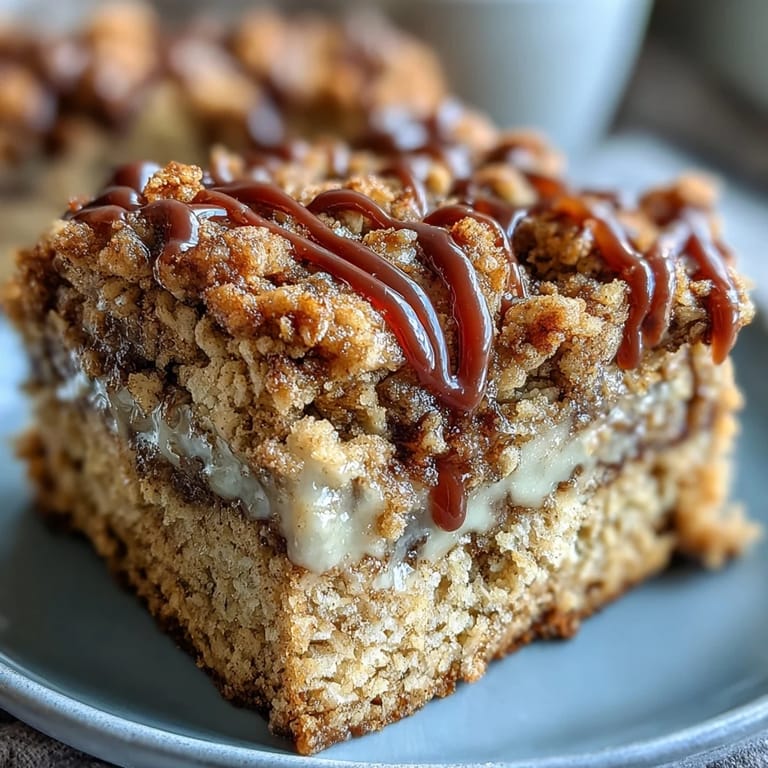
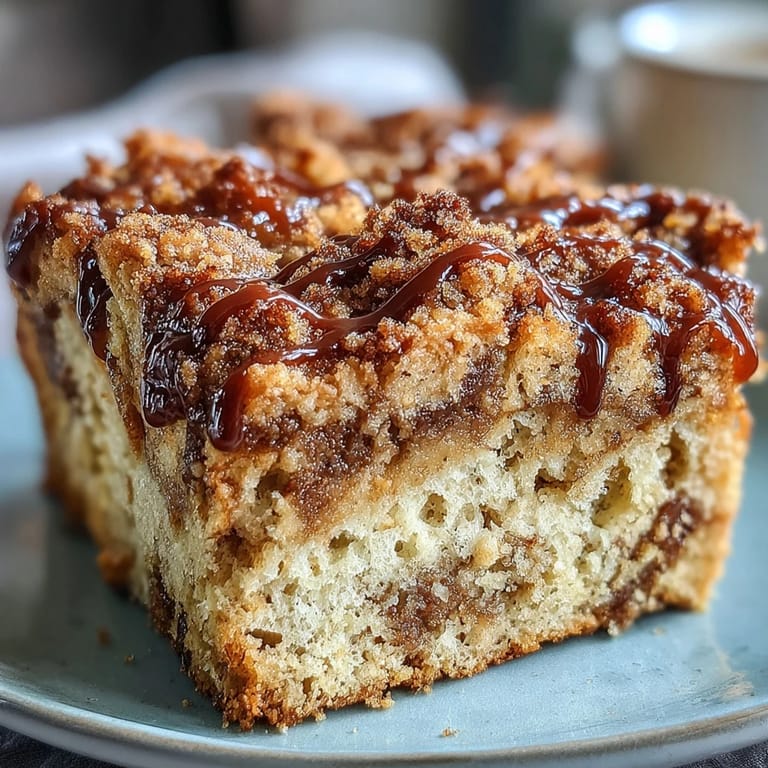
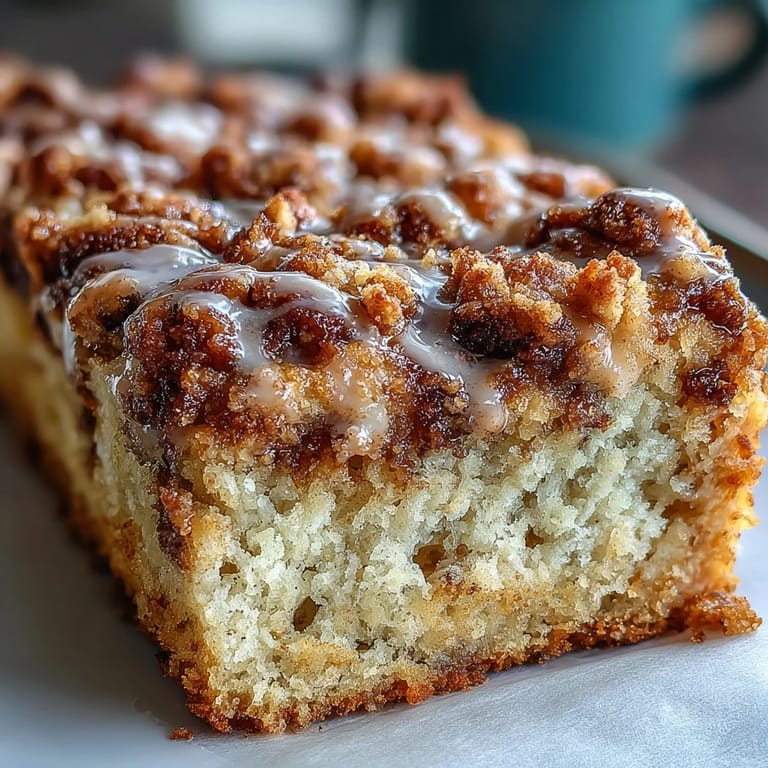
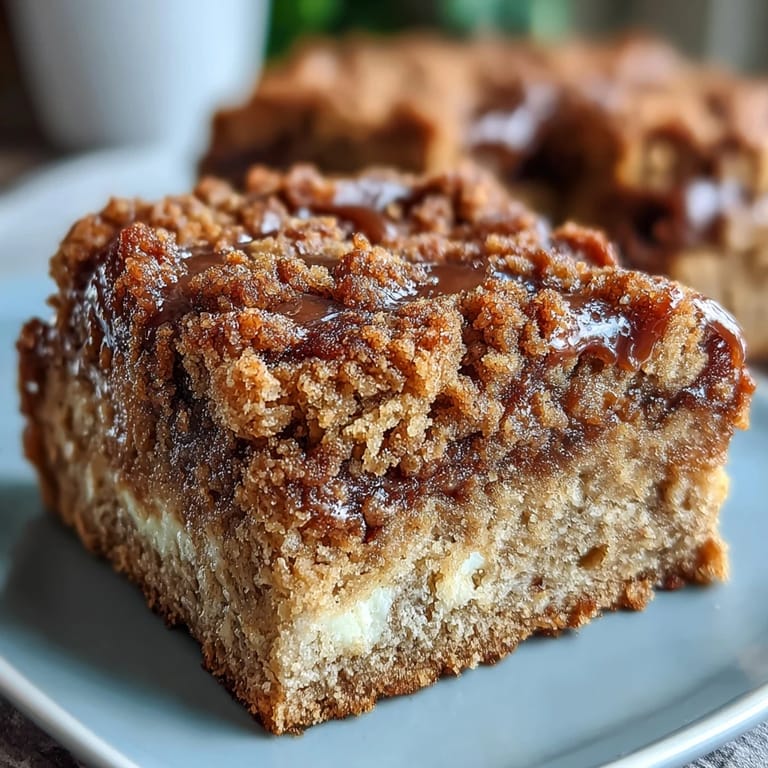
- Spread the remaining oat mixture over the cinnamon layer, then sprinkle the last of the cinnamon sugar on top. This creates that swirl effect you see when you cut into it.
- Make and add the crumble:
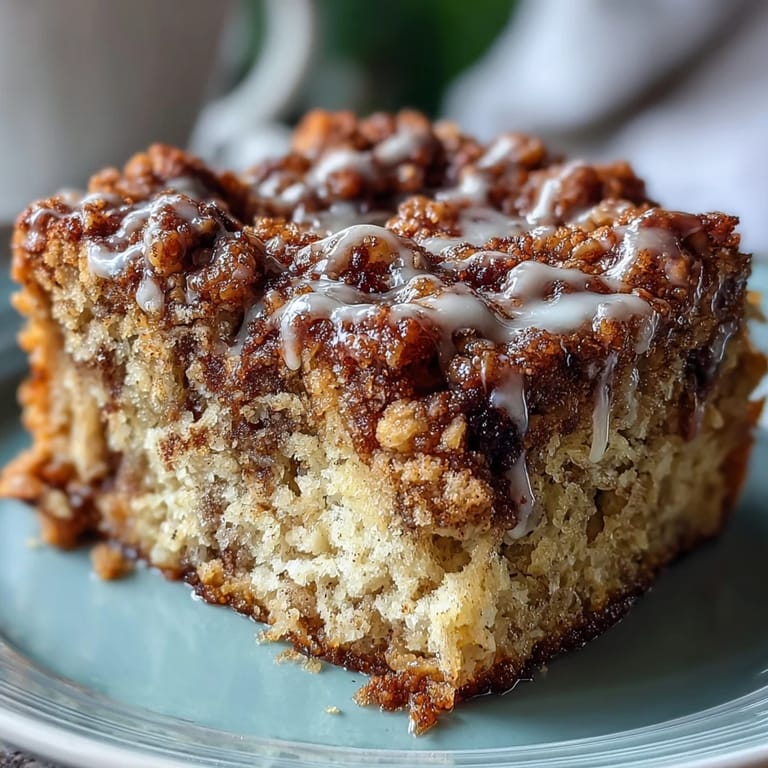
- In another bowl, combine the oats, almond flour, coconut sugar, melted butter, cinnamon, and salt until it looks sandy with small clumps. Scatter it evenly over the top—this is what makes it feel like coffee cake.
- Bake until golden:
- Slide it into the oven for 28 to 32 minutes, until the center looks set and the top is golden brown. A toothpick inserted in the center should come out clean, not wet.
- Cool and slice:
- Let it rest for 5 to 10 minutes before cutting—it'll firm up slightly and slice cleaner. Serve warm or at room temperature; it actually tastes better the next day.
 Anheften
  Anheften
 My partner took one bite straight from the pan on a Tuesday morning and asked why I hadn't made this earlier. That's when I stopped thinking of it as a health thing and started thinking of it as actual food—the kind that stands on its own merit, not because it hits a macro target.
Flavor Swaps That Actually Work
Once you understand the structure, you can play with it. I've made this with pumpkin spice swapped for cinnamon in fall, and with almond extract instead of vanilla for something nuttier. The base stays the same, but the topping is where personality happens—one morning I stirred in some chopped pecans into the crumble and it felt completely different.
Storage and Meal Prep
This cake actually improves after a day in the fridge, once flavors have had time to settle. Cover it loosely with foil or store it in a sealed container for up to four days, and you can eat it cold straight from the fridge or warm it for 20 seconds in the microwave. I portion mine into four pieces on Sunday and grab one each morning; it takes the thought out of breakfast and guarantees I'm actually eating something substantial.
Making It Yours
This recipe works because it's flexible enough to adapt but structured enough that it always works. I've reduced the maple syrup when I used honey instead, swapped the cottage cheese for Greek yogurt on days I wanted tanginess, and experimented with different nut flours based on what was open in my pantry. The protein structure remains solid, which is why it never falls apart.
- If you want it sweeter, bump the maple syrup to 3 tablespoons, but taste the batter first because it might already be enough.
- Fresh berries scattered on top before serving add brightness without changing how it bakes.
- Make it gluten-free by using certified gluten-free oats and replacing almond flour with extra rolled oats in the topping.
 Anheften
  Anheften
 This cake solved the breakfast problem I didn't know I had—something substantial, something that tastes good enough to look forward to, something made with actual ingredients I recognize. That's everything.
Rezept Fragen & Antworten
- → Kann ich den Magerquark durch griechischen Joghurt ersetzen?
Ja, griechischer Joghurt ist eine hervorragende Alternative. Er verleiht eine leicht säuerliche Note und ähnliche Proteinwerte.
- → Wie lange hält sich der Kaffekuchen im Kühlschrank?
Der gebackene Kaffekuchen hält sich verschlossen bis zu 5 Tage im Kühlschrank und kann auch eingefroren werden.
- → Kann ich das Proteinpulver weglassen?
Ja, ersetzen Sie das Proteinpulver durch zusätzliche 3-4 Esslöffel Haferflocken oder Mehl für eine traditionellere Version.
- → Ist dieser Kaffekuchen glutenfrei?
Verwenden Sie zertifizierte glutenfreie Haferflocken und glutenfreies Mehl für eine vollständige glutenfreie Version.
- → Kann ich den Zucker durch andere Süßungsmittel ersetzen?
Kokosblütenzucker oder Erythrit funktionieren gut. Honig oder Ahornsirup können ebenfalls verwendet werden.