 Anheften
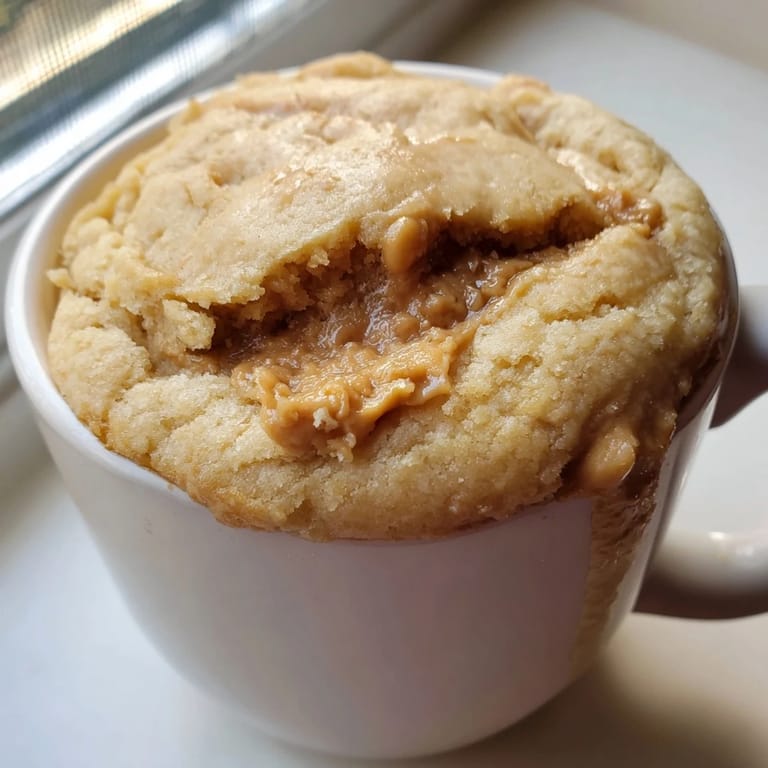
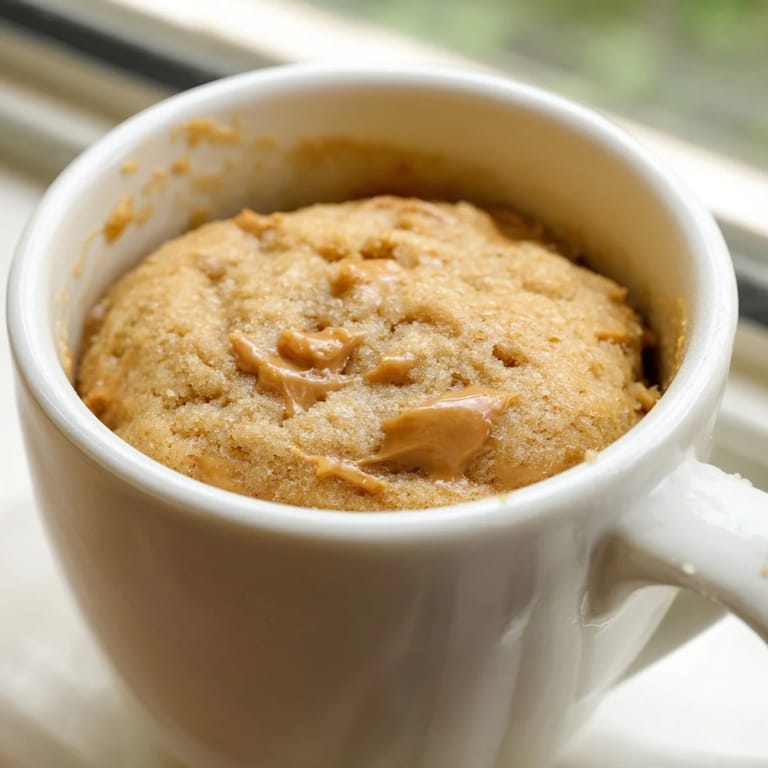
 There's something magical about those nights when you're craving something sweet but the thought of pulling out mixing bowls and baking sheets feels like too much effort. I discovered this peanut butter mug cake completely by accident—I was standing in my kitchen at 10 PM with an overwhelming sugar craving and nothing but a mug, a fork, and some peanut butter in the cupboard. Two minutes later, I was holding something warm, fluffy, and so ridiculously good that I've been making it ever since whenever that specific kind of instant-gratification dessert emergency strikes.
I've made this for late-night study sessions, for friends who stopped by unexpectedly, and once even for my neighbor who came over complaining about a terrible day. Watching someone's face light up when they realize this entire warm, fluffy cake came out of a microwave in less time than it takes to boil water—that's become my favorite part of this recipe.
Ingredients
- Creamy peanut butter: This is your flavor foundation, so don't skip on quality—I learned the hard way that thin, separated peanut butter makes a noticeably flatter cake.
- Unsalted butter, melted: The melted butter adds richness and helps the cake rise properly; cold butter won't mix smoothly into the peanut butter.
- Large egg: This is your leavening agent and structure—one egg is enough for this small cake, and the size matters.
- Milk: Any kind works, and I've used dairy, oat, and almond milk with great results.
- Vanilla extract: Just a splash to round out the peanut butter flavor without making it taste like vanilla.
- All-purpose flour: Keeps the cake tender and prevents it from being too dense; scooping straight from the bag can pack it down, so spoon and level for accuracy.
- Granulated sugar: This sweetens the cake and helps it rise—brown sugar works too if you want a deeper flavor.
- Baking powder: The magic ingredient that makes this rise into an actual cake instead of a peanut butter brick.
- Salt: A tiny pinch that brings all the flavors into focus.
Tired of Takeout? 🥡
Get 10 meals you can make faster than delivery arrives. Seriously.
One email. No spam. Unsubscribe anytime.
Instructions
- Combine the fats:
- Pour your melted butter into the mug with the peanut butter and stir until they're completely smooth and married together. This is your flavor base, so don't rush it.
- Add the wet ingredients:
- Crack your egg into the mug and add the milk and vanilla, then whisk everything together with a fork until there are no streaks of egg white left. This should take about 30 seconds of actual whisking.
- Fold in the dry ingredients:
- Sprinkle the flour, sugar, baking powder, and salt over the wet mixture, then stir gently until just combined—this is the moment where overmixing actually matters, so stop as soon as you don't see dry flour anymore.
- Microwave into cake:
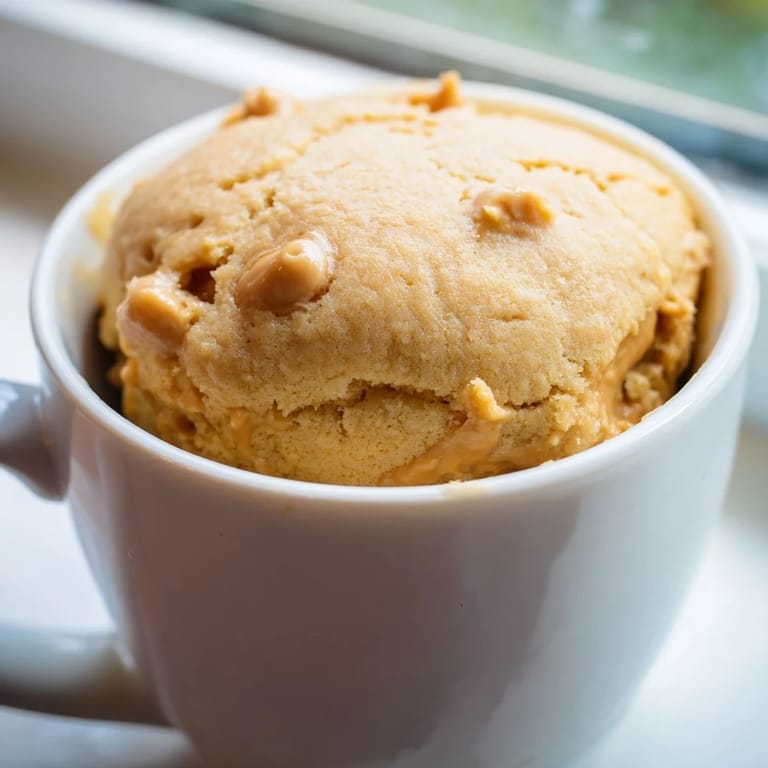
- Zap it on high for 60 to 75 seconds; you'll watch it rise and puff up through the microwave window, which is genuinely satisfying. The top should look set but still slightly moist in the very center when you pull it out.
- Cool and enjoy:
- Wait just a minute or two—the cake continues cooking slightly from residual heat—then grab a spoon or fork and eat it straight from the mug while it's still warm.
 Anheften
 One of my favorite moments was watching my sister make this while staying over, and she ate it while standing at the kitchen counter in her pajamas at midnight without a single regret. That's when I realized this recipe had become less about impressing people and more about allowing ourselves small, warm moments of joy on difficult days.
Flavor Variations That Work
Once you've made this basic version a few times, you start seeing endless possibilities. I've topped it with chocolate chips before microwaving (they melt into the cake beautifully), drizzled the finished cake with honey, and even stirred a spoonful of jam into the batter for a swirl effect. My personal discovery was mixing a tiny bit of cinnamon into the dry ingredients, which adds a warmth that makes the peanut butter taste even richer.
Why This Works Better Than You'd Expect
Most microwave desserts either taste like rubber or taste like scrambled eggs, which is why I was genuinely shocked when this turned out fluffy and actually delicious. The combination of having enough fat from the peanut butter and butter, plus the baking powder for lift, means you get actual cake structure instead of a dense microwave puddle. The short cooking time also means the edges don't get tough while the center stays undercooked, which is the eternal microwave dessert problem.
Making It Your Own
The beauty of a single-serving cake is that you can experiment without worrying you've ruined an entire batch. I've used natural peanut butter for a less sweet version, switched the milk to something non-dairy when that's what I had on hand, and even swapped almond butter when I was out of peanut butter. The structure stays solid as long as you keep the ratios roughly the same.
- Top it with a scoop of vanilla ice cream while it's still warm and watch it melt into pockets of delicious throughout the cake.
- A light dusting of powdered sugar on top makes it feel more like a proper dessert if you're eating it for something other than a midnight snack.
- This scales up to make four servings in a small baking dish if you're suddenly cooking for other people, though the magic of the microwave speed is partly lost.
 Anheften
 This recipe has become my answer to that specific human need for something warm and comforting in under three minutes. Make it for yourself on a random Tuesday, or make it for someone else when they need a small moment of kindness.
Rezept Fragen & Antworten
- → Wie lange sollte der Kuchen in der Mikrowelle garen?
Der Kuchen sollte 60 bis 75 Sekunden bei hoher Leistung gegart werden, bis er aufgegangen und in der Mitte fest ist. Nicht übergaren.
- → Kann ich die Milch durch eine pflanzliche Alternative ersetzen?
Ja, Mandel- oder Hafermilch sind geeignete Alternativen, die den Geschmack leicht variieren können.
- → Welche Zutaten sorgen für das lockere Ergebnis?
Backpulver und die richtige Mischung von Eiern und Butter machen den Teig fluffig und saftig.
- → Wie kann ich den Geschmack noch variieren?
Mit Schokostückchen, Honig oder einer Kugel Eis wird der Genuss noch intensiver und abwechslungsreicher.
- → Ist der Kuchen für Vegetarier geeignet?
Ja, alle Zutaten sind vegetarisch und die Zubereitung einfach gehalten.
- → Gibt es Hinweise bei Allergien?
Dieser Kuchen enthält Erdnüsse, Eier, Milchprodukte und Gluten. Bei Allergien sollten entsprechende Ersatzstoffe verwendet werden.