 Anheften
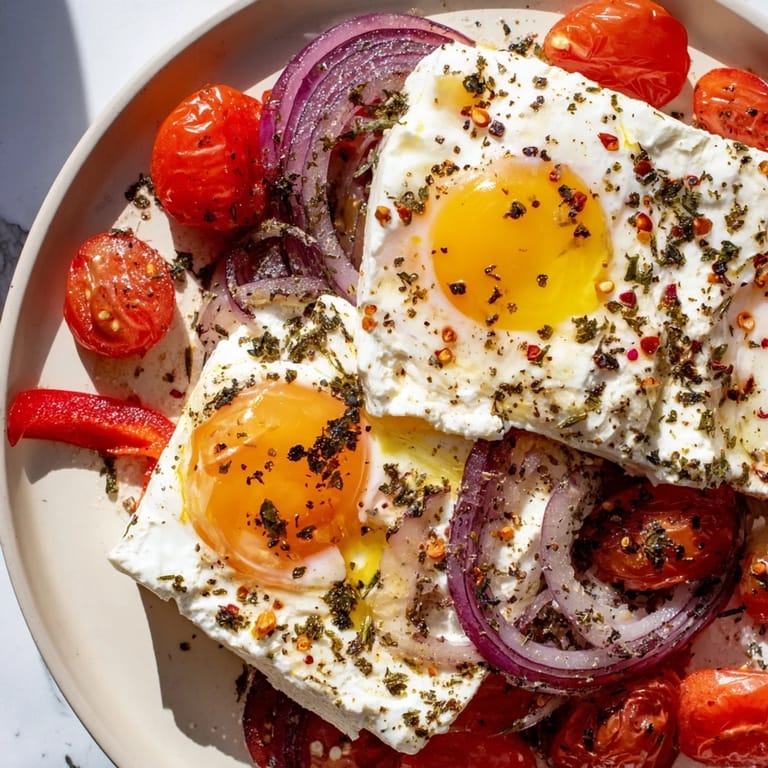
 An evening spent wandering through a sunlit Athens market left me holding a wedge of salty feta and a handful of sun-warm tomatoes, and I suddenly understood why some dishes don't need complicated techniques—they just need good ingredients trusted to themselves. This baked feta came together almost by accident, in a kitchen far from Greece, but it captured something I'd been chasing: that moment when eggs and melted cheese create their own sauce, where crispy bread becomes essential for soaking up every last drop.
I made this for a friend on a Sunday morning when we'd both slept through proper breakfast, and watching her tear into warm bread soaked with yolk and melted cheese, listening to her actually pause mid-conversation—that's when I knew this recipe had staying power. She's made it twice since.
Ingredients
- Cherry tomatoes, halved (2 cups): Choose ones that are deeply colored and smell sweet; they release their brightness as they soften in the heat.
- Red onion, thinly sliced (1 small): This becomes almost jammy and sweet as it bakes, losing its bite and becoming part of the glue that holds everything together.
- Garlic, minced (2 cloves): Don't skip mincing finely—larger pieces will overshadow the more delicate flavors.
- Red bell pepper, sliced (1 small): Adds color and a gentle sweetness that balances the salty feta.
- Feta cheese block (7 oz / 200 g): Buy it as one block, not crumbled; it creates a creamy center that the eggs can nestle into.
- Large eggs (4): Room temperature eggs cook more gently and evenly around the warm cheese.
- Extra virgin olive oil (3 tbsp): This is not the time to reach for the bottle in the back of the cabinet—good oil matters.
- Dried oregano and thyme (1 tsp oregano, 1/2 tsp thyme): These dried herbs bloom beautifully in the oven heat and give the whole dish its Mediterranean soul.
- Crushed red pepper flakes (1/4 tsp, optional): Just enough to whisper heat, not shout it.
- Salt and black pepper: Taste as you go; the feta brings its own salt, so be gentle with the shaker.
- Fresh parsley for garnish (2 tbsp, chopped): This last-minute green lifts everything, adding brightness after the oven has done its warming work.
Tired of Takeout? 🥡
Get 10 meals you can make faster than delivery arrives. Seriously.
One email. No spam. Unsubscribe anytime.
Instructions
- Heat your oven:
- Turn it to 400°F (200°C) and let it preheat fully—a properly heated oven is your first small act of care for this dish.
- Build your vegetable base:
- Toss the tomatoes, onion, bell pepper, and garlic with olive oil, oregano, thyme, red pepper flakes if using, salt, and pepper in a medium baking dish. Everything should glisten and smell immediately alive.
- Nestle the feta:
- Set the cheese block right in the center of the vegetables, like it's sitting at the heart of things where it belongs.
- First bake:
- Slide the dish into the oven for 15 minutes until the vegetables have softened slightly and the feta's edges are beginning to turn golden and slightly brown.
- Create egg wells:
- Remove from the oven and use a spoon to make four small indentations around the feta—these are homes for your eggs, carved into the warm vegetable mixture.
- Add eggs:
- Crack one egg into each well, being gentle so the yolks stay whole and the whites find their way into the crevices.
- Final bake:
- Return to the oven for 8–10 minutes, watching until the egg whites set but the yolks still jiggle slightly when you move the dish—this is the whole point.
- Finish and serve:
- Pull from the oven, scatter fresh parsley over everything, and bring immediately to the table with crusty bread for soaking.
 Anheften
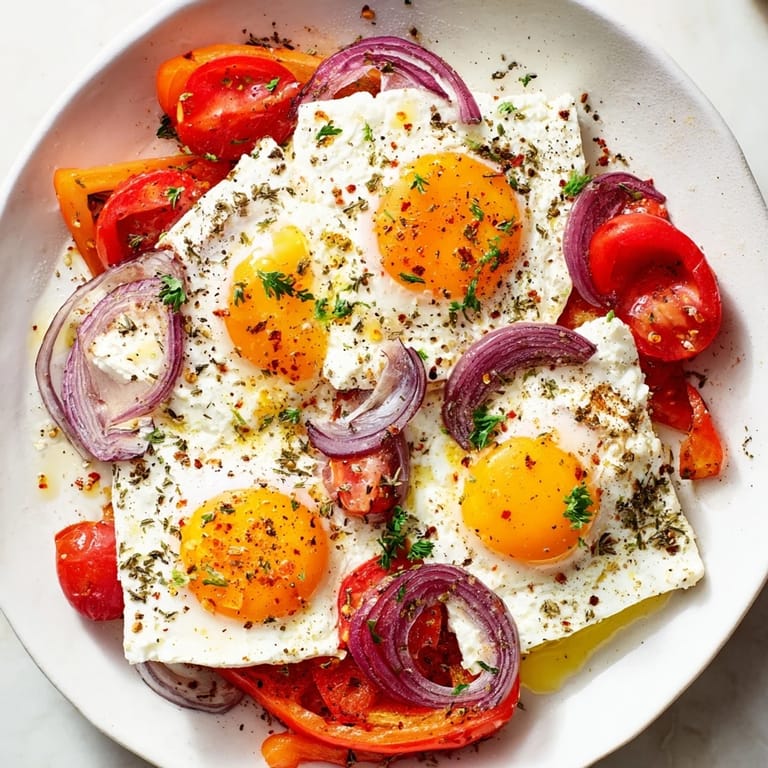
 There's something almost meditative about watching the transformation—vegetables that were sharp and bright becoming soft, the feta releasing its creaminess as it heats, and then the sudden delicate moment of cracking the eggs and knowing you've got exactly ten minutes before everything needs to be eaten. The dish comes out of the oven still bubbling slightly, warm cheese and yolk creating their own sauce, bread waiting nearby. This is the kind of cooking where timing and temperature matter less than paying attention and trusting what you see.
Variations That Work
Fresh spinach stirred in with the vegetables adds earthiness without changing the cooking time or logic. Kalamata olives scattered across before baking bring a briny depth that some people say is essential—I find they're wonderful but never necessary. A handful of diced fresh dill in place of the parsley shifts the entire mood toward something greener and more herbaceous. The core of this dish is flexible; what matters is keeping the feta block whole and the eggs barely set.
Why This Dish Feels Special
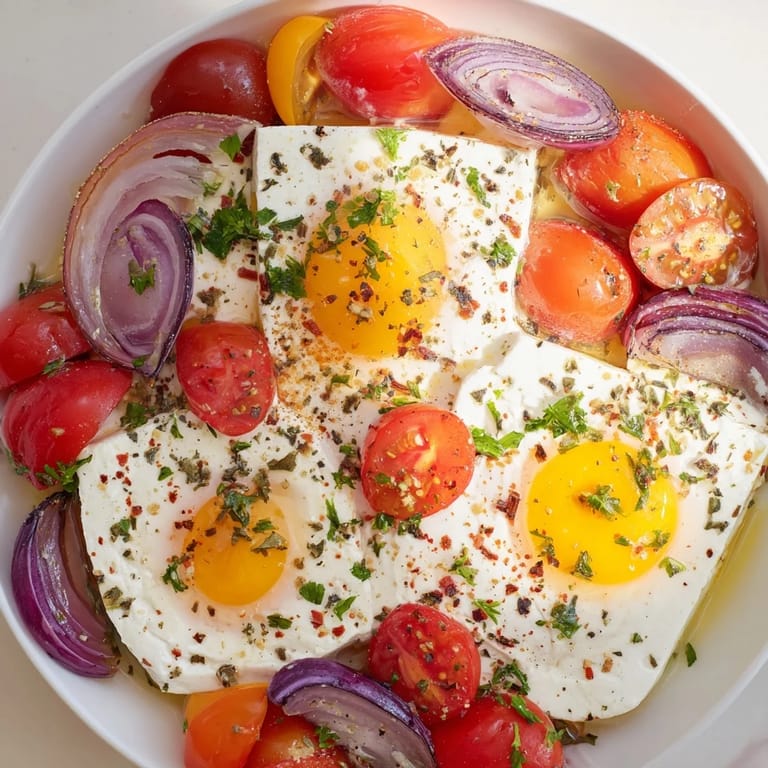
Baked feta and eggs exist in that rare category of food that feels completely effortless while tasting deliberately crafted. You're not standing at the stove managing temperature or timing reductions; the oven does the thinking for you. What you get back is something warm, creamy, savory, and just slightly runny—food that wants to be shared with bread, a good wine, and people you don't mind sitting with in silence.
Serving and Pairing
This dish doesn't ask for much—a sturdy bread for soaking is really all it needs, though a green salad with sharp vinaigrette wouldn't hurt. For wine, keep it light and crisp: a Sauvignon Blanc or chilled rosé lets the food shine without competing. The beauty of this being both simple and elegant means it works equally well for a quiet breakfast for two or a more casual brunch table where everyone's passing bread and stealing bites from each other's plates.
- Serve immediately while the cheese is still creamy and the eggs are warm enough to eat.
- Have bread ready and tearing, not sliced—there's something about torn bread that feels more genuine here.
- If the dish cools even slightly, it loses the magic; plan to sit down to eat right away.
 Anheften
 This is the kind of recipe that stays in your regular rotation not because it's trendy or Instagram-ready, but because it genuinely tastes good and respects your time. Make it once and you'll know exactly why it works.
Rezept Fragen & Antworten
- → Wie gelingt das perfekte Garen der Eier?
Die Eier sollten so lange gebacken werden, bis das Eiweiß gestockt ist, das Eigelb aber noch leicht flüssig bleibt. Das dauert etwa 8 bis 10 Minuten im vorgeheizten Ofen.
- → Kann ich den Auflauf auch mit anderen Käsesorten ersetzen?
Feta sorgt für eine cremige Textur und würzigen Geschmack, aber auch Halloumi oder Ziegenkäse bieten interessante Alternativen.
- → Eignet sich der Auflauf für eine glutenfreie Ernährung?
Ja, das Gericht selbst enthält kein Gluten. Achten Sie nur darauf, das Brot zum Servieren glutenfrei zu wählen.
- → Welche Kräuter passen besonders gut zu diesem Gericht?
Die Kombination aus Oregano und Thymian unterstreicht den mediterranen Charakter, frischer Petersilie als Garnitur sorgt für Frische.
- → Wie kann man das Gericht würziger gestalten?
Eine Prise Chiliflocken bringt angenehme Schärfe, gleichzeitig passen auch schwarze Oliven als Beilage gut dazu.