 Anheften
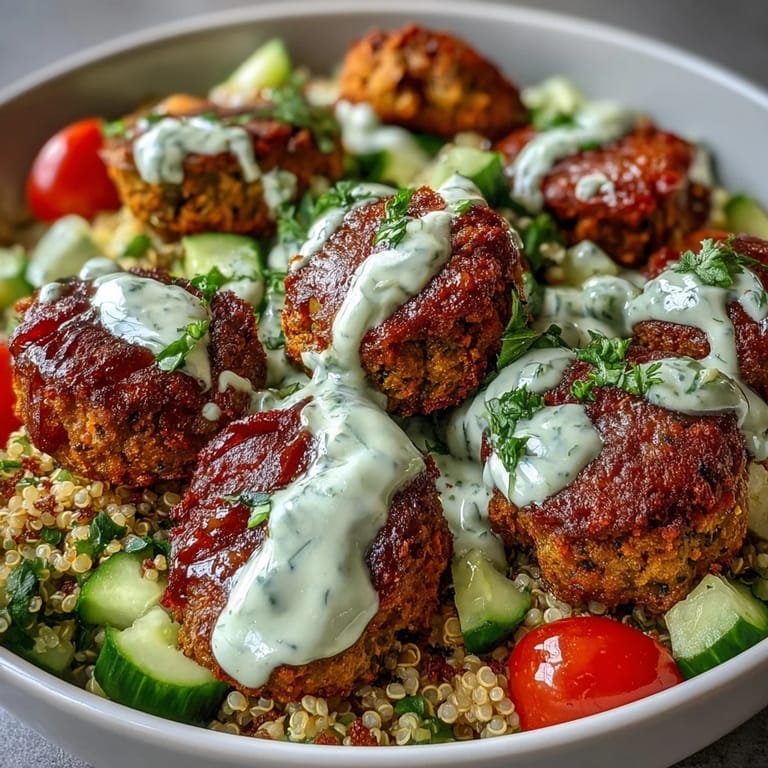
 An afternoon in a bustling kitchen with my cousin, surrounded by the sharp smell of fresh cilantro and the earthy hum of a food processor, led me to create this bowl. She'd mentioned wanting something filling but light, and somehow these crispy baked falafel paired with fluffy quinoa felt like the perfect answer. The beauty of it isn't just in how quickly it comes together, but in how it manages to feel both comforting and bright, like a meal that celebrates every ingredient without pretense.
I made this for a dinner party once where I somehow forgot to mention it was vegetarian, and my meat-eating friends were so absorbed in the flavors and textures that it became irrelevant. Watching people scrape the last bit of tahini sauce from their bowls and ask for the recipe felt like the highest compliment, like I'd created something that transcended dietary categories and just tasted like generosity.
Ingredients
- Chickpeas: The foundation of your falafel, and rinsing them thoroughly removes the starchy liquid that can make the mixture gummy instead of light.
- Fresh parsley and cilantro: Don't skip these or use dried herbs; the bright, fresh flavor is what makes the falafel sing rather than feel heavy.
- Green onions: They add a subtle sharpness that prevents the bowl from feeling one-dimensional, appearing in both the falafel and as a garnish.
- Garlic: Minced small and distributed evenly creates a warmth throughout the falafel without overpowering it.
- Ground cumin and coriander: These spices should smell fragrant when you open the container; stale spices are the silent killer of otherwise good food.
- Cayenne pepper: Optional but recommended for a gentle warmth that builds as you eat, not a fiery heat.
- Chickpea flour: This is the binder that holds everything together while keeping the texture light and slightly porous; all-purpose flour works but chickpea flour has better flavor alignment.
- Olive oil: A light brush before baking is all you need for that golden, crispy exterior.
- Quinoa: Rinsing it first removes any residual bitter coating that can surprise your palate if you forget this step.
- Cucumber and cherry tomatoes: The contrast between cool, crisp cucumber and juicy tomatoes is what keeps each bite interesting.
- Tahini: The creamy base of your sauce, and whisking it with water gradually prevents lumps that can turn the sauce grainy.
- Lemon juice: The acid that brightens everything, making the entire bowl feel alive rather than heavy.
Tired of Takeout? 🥡
Get 10 meals you can make faster than delivery arrives. Seriously.
One email. No spam. Unsubscribe anytime.
Instructions
- Heat your oven and prep the stage:
- Preheat to 400°F and line your baking sheet with parchment paper so your falafel won't stick and cleanup feels less like a chore.
- Build your falafel base:
- Combine your chickpeas, herbs, aromatics, and spices in a food processor, pulsing until the mixture is mostly smooth but still slightly coarse. This texture is crucial; process too long and you'll have falafel paste, not enough and it won't hold together.
- Shape with damp hands:
- Wet your hands before forming each ball or patty, which prevents sticking and gives you that satisfying sense of control in the kitchen. About 12 pieces gives you three falafel per bowl with one leftover for the chef's tasting.
- Brush and bake:
- Place your falafel on the prepared sheet, brush lightly with olive oil, and bake for 22 to 25 minutes, flipping halfway through so they brown evenly on all sides. Listen for that slight crackle when you flip them; it means the exterior is setting.
- Cook your quinoa simultaneously:
- In a saucepan, combine rinsed quinoa, water, and salt, then bring to a boil and immediately reduce heat to low. Cover and simmer for 15 minutes, then remove from heat and let it sit covered for another 5 minutes before fluffing with a fork.
- Whisk your tahini sauce to silky smoothness:
- Combine tahini, minced garlic, lemon juice, salt, and 2 tablespoons of water, whisking until creamy. Add more water a little at a time if you prefer a thinner sauce that drizzles more easily.
- Assemble your bowls with intention:
- Start with a base of fluffy quinoa in each bowl, then arrange your fresh vegetables and falafel on top, and finally drizzle the sauce so it pools slightly in the center. This order ensures everything stays crispy and the flavors mingle without the components becoming soggy.
 Anheften
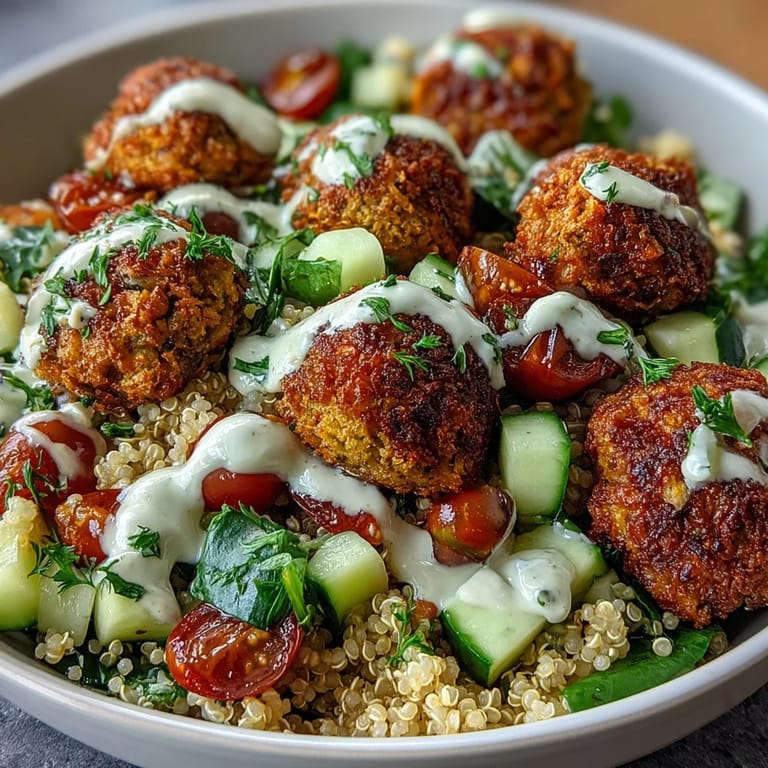
 There's something deeply satisfying about placing a warm falafel onto cool quinoa, watching the steam rise as the temperature contrasts, and then drizzling everything with sauce that connects each element. That moment, before the first bite, when the bowl looks intentional and complete, is when you realize you've created something nourishing that also feels like celebration.
Meal Prep and Storage
Cook your quinoa and falafel separately, storing them in airtight containers for up to four days in the refrigerator. The fresh vegetables are best assembled within a few hours of eating, but you can chop them the night before and keep them in sealed containers. When you're ready to eat, simply reheat the falafel in a 350°F oven for about five minutes to restore its crispness, then assemble your bowl fresh.
Flavor Variations and Additions
This bowl is wonderfully adaptable depending on what's in your kitchen or what your mood demands. I've added roasted red peppers for sweetness, crumbled feta for tanginess, and even a fried egg on top when I wanted something more indulgent. The tahini sauce also welcomes experimentation; a teaspoon of pomegranate molasses adds depth, or a pinch of sumac brings a lemony brightness without extra acid.
Why This Bowl Belongs in Your Weekly Rotation
This recipe respects your time while never compromising on taste, which is the mark of a truly useful dish rather than just a passing trend. It nourishes you completely, tastes better than takeout, and makes your kitchen smell like somewhere people want to gather. Whether you're eating alone on a Tuesday or feeding guests on a Saturday, this bowl adapts to the occasion without fuss.
- Toasted pumpkin seeds or slivered almonds add a satisfying crunch that makes each bite more interesting.
- A squeeze of fresh lemon juice right before eating brightens everything and cuts through the tahini richness.
- Leftover falafel reheats beautifully in the oven and works wonderfully in pita wraps with hummus the next day.
 Anheften
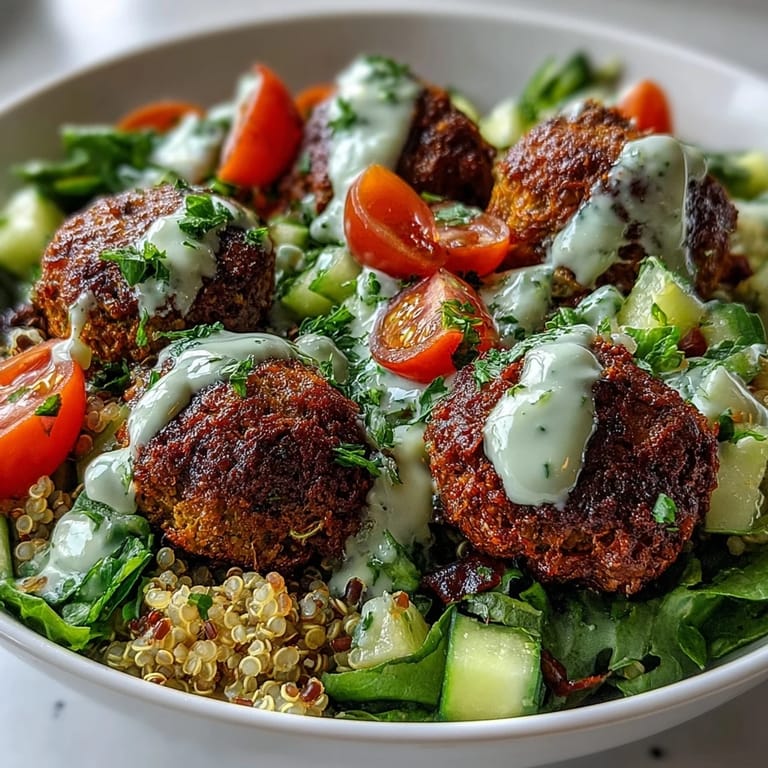
 This bowl has become my answer to the question of what to cook when I want something that feels both virtuous and delicious, like I'm not sacrificing flavor for nutrition. Make it once and it becomes the meal you return to, the one that reminds you that food doesn't have to be complicated to be completely satisfying.
Rezept Fragen & Antworten
- → Kann ich die Falafel auch frittieren anstatt backen?
Ja, Sie können die Falafel auch in heißem Öl frittieren. Geben Sie hierfür 2-3 cm Öl in einen Topf und erhitzen Sie es auf 175°C. Frittieren Sie die Bällchen 2-3 Minuten bis sie goldbraun sind, und lassen Sie sie auf Küchenpapier abtropfen.
- → Wie lange sind die Falafel im Kühlschrank haltbar?
Gekochte Falafel halten sich im Kühlschrank bis zu 3 Tage in einem luftdichten Behälter. Erwärmen Sie sie vor dem Servieren bei 180°C für 5-10 Minuten im Ofen, damit sie wieder knusprig werden.
- → Kann ich die Tahini-Soße vorbereiten?
Die Tahini-Soße kann bis zu einer Woche im Kühlschrank aufbewahrt werden. Bewahren Sie sie in einem verschlossenen Glas auf. Vor dem Servieren eventuell etwas Wasser hinzufügen, da die Soße im Kühlschrank etwas fester wird.
- → Welche Alternativen gibt es zu Kichererbsenmehl?
Sie können normales Weizenmehl oder Reismehl verwenden. Für eine glutenfreie Variante eignet sich auch Mandelmehl oder Buchweizenmehl. Die Menge bleibt bei allen Varianten gleich.
- → Kann ich das Gemüse variieren?
Absolut! Sie können jedes frische Gemüse Ihrer Wahl verwenden. Passende Alternativen sind geriebener Möhren, Rettichscheiben, rote Zwiebeln, Avocado oder gegrillte Paprika. Achten Sie darauf, das Gemüse mundgerecht zu schneiden.